

A Guide to Tree Planting
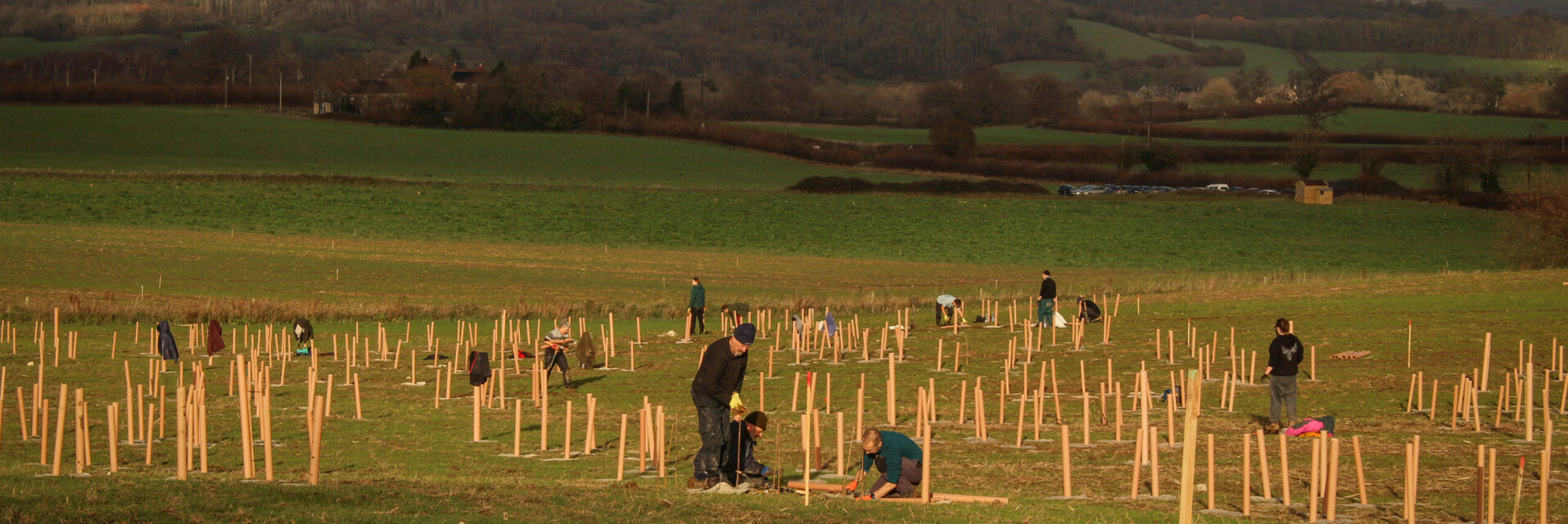
Successful tree planting is about more than putting a tree in the ground. From choosing the right species for the right place to providing essential aftercare in the early years, thoughtful planting gives trees a strong start and helps them to survive long term. This guide explores why trees matter and how you can plant and care for them with confidence.
The Benefits of Tree Planting
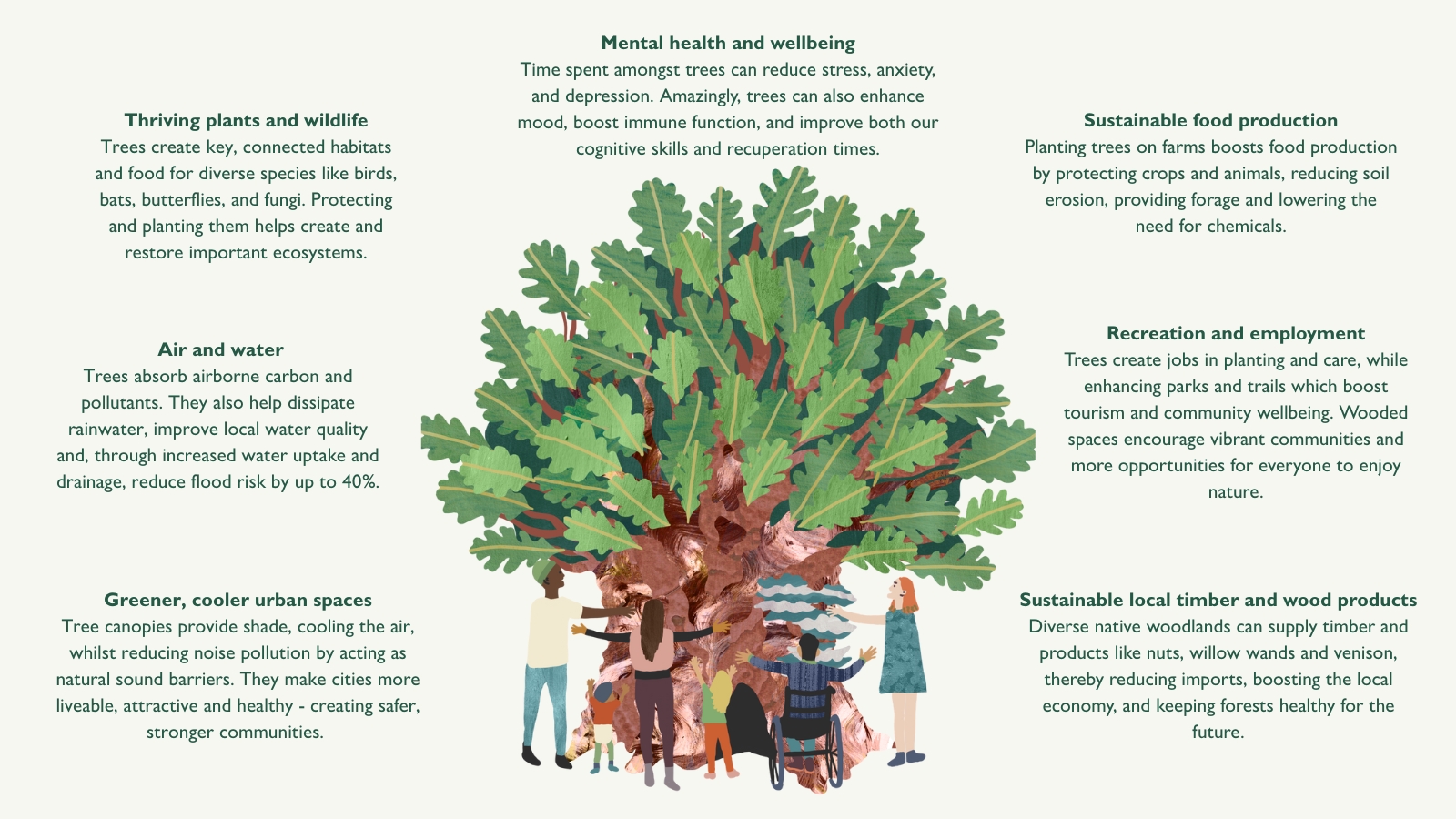
Trees offer many wonderful benefits. They play a key role in tackling the climate crisis, connecting habitats and supporting wildlife, and cooling our cities. They also contribute to our well-being, with research showing that time spent among trees can restore focus, reduce anxiety, and improve both mental and physical health. Planting trees brings wide-reaching benefits for nature, the climate, communities and people. Find out more here.
Right Tree, Right Place
Planting trees is one of the most positive actions we can take for nature and climate, but not every tree belongs everywhere. The principle of “Right Tree, Right Place” ensures that each planting decision supports the surrounding landscape, rather than competing with it. This means thinking carefully about soil type, drainage, exposure, and existing habitats.
A silver birch that thrives on a dry, sandy slope will struggle in a waterlogged field, while alder or willow may flourish where the ground stays damp. Taking time to match species to site conditions increases survival rates and creates resilient woodlands with the best possible chance to thrive.
Equally important is considering the ecological context of a site. Many of our native species, such as oak, hazel and rowan, have evolved alongside local wildlife and support hundreds of insects, birds, and mammals. If we then introduce inappropriate species to existing ecological sites, in certain circumstances, it can unintentionally harm existing ecosystems.
Resources like the Woodland Trust’s Tree Species Selector can help landowners choose species that complement their land. If you’re planting through our Trees for Climate fund, our Tree Team will provide expert advice and work with you to design your planting project for the best possible results.

Planting Techniques
Planting trees is a rewarding, hands-on process and with the right tools and techniques, anyone can do it successfully. We’ve put together a series of step-by-step “How To” videos to guide you through each stage of planting, from preparing the ground to helping new trees thrive. Learn what tools you need, how to work with the soil, and the best ways to give trees a strong start.
Each video covers:
• Tools and materials
• Ground preparation
• Planting techniques
• Protection and mulching
• Aftercare tips
Our videos show how to plant a woodland, a hedgerow, and fruit trees, with practical tips and clear advice from our experienced Tree Team.
How to plant a new woodland
How to plant a hedge
How to plant a fruit tree

Aftercare
Looking after young trees after they’ve been planted is essential to ensuring their success. Newly planted trees need regular attention during their first few years as they establish roots and adapt to their surroundings.
Follow this simple checklist to give your trees the best start:
- Water regularly where possible – especially in dry spells, for at least the first two growing seasons. Where large quantities of trees have been planted, this is not always possible due to accessibility to water sources.
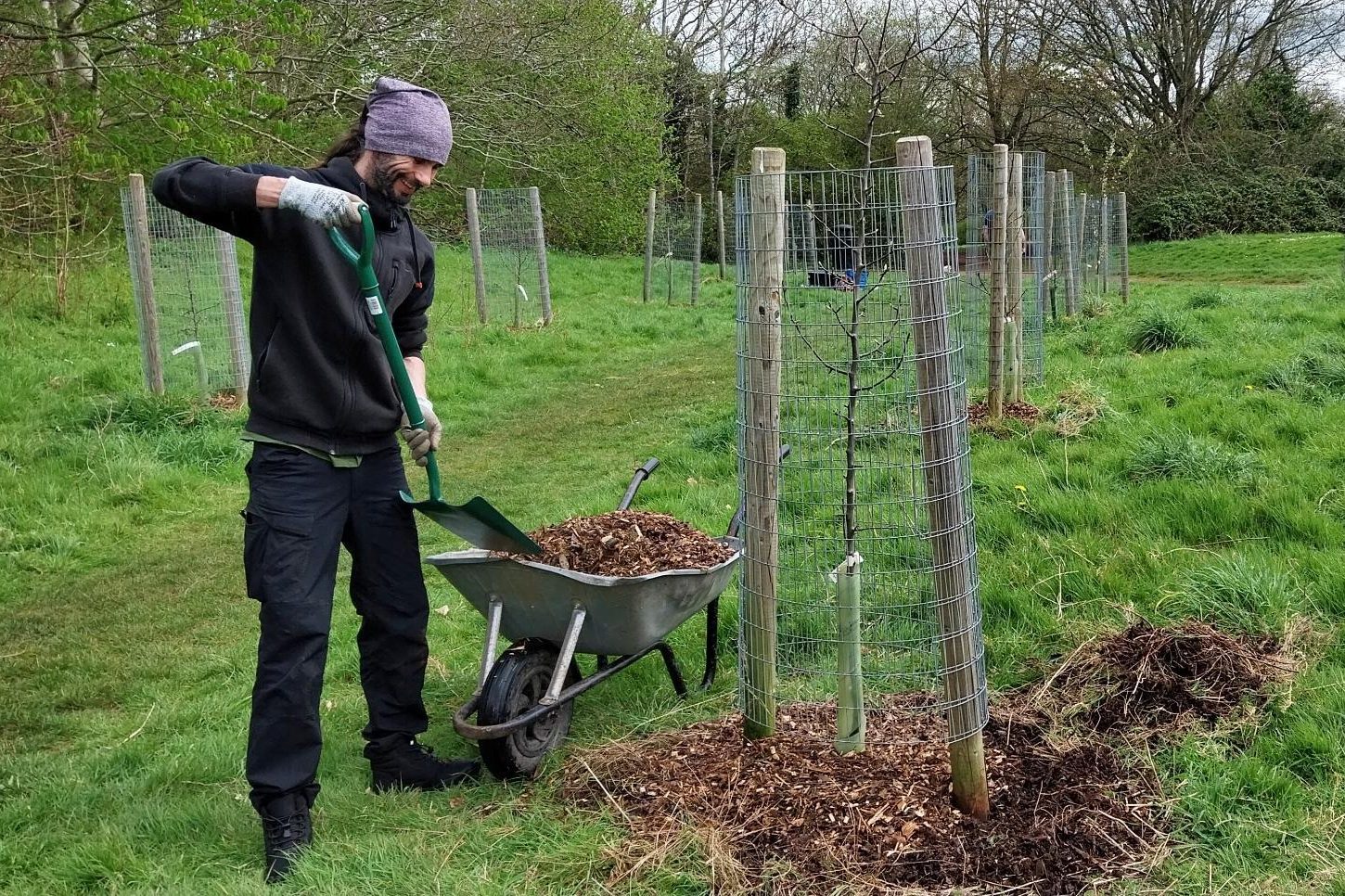
- Mulch the base – apply mulch around the trunk to retain moisture and suppress weeds and grass growth.
- Check stakes and ties – make sure they’re secure but not too tight. Adjust or remove once the tree can stand alone.
- Weed control – keep the area around the base clear of weeds to reduce competition for water and nutrients.
- Inspect for damage – look out for pests, disease, or animal damage, and replace any guards or protection if needed.
- Replace dead trees – revisit your trees in the summer or autumn months and mark the trees that have died, so they can be replaced during the winter planting season.
The Tree Council and the Royal Horticultural Society provide excellent, detailed guides on how to care for newly planted trees. Watch this Tree Aftercare video from the Royal Horticultural Society.
Planting the right tree in the right place will help your trees to survive long-term. By carefully considering location, soil type, sunlight, water needs and root growth, the tree is more likely to be able to establish naturally, with reduced aftercare needs.
Funding for Tree Planting
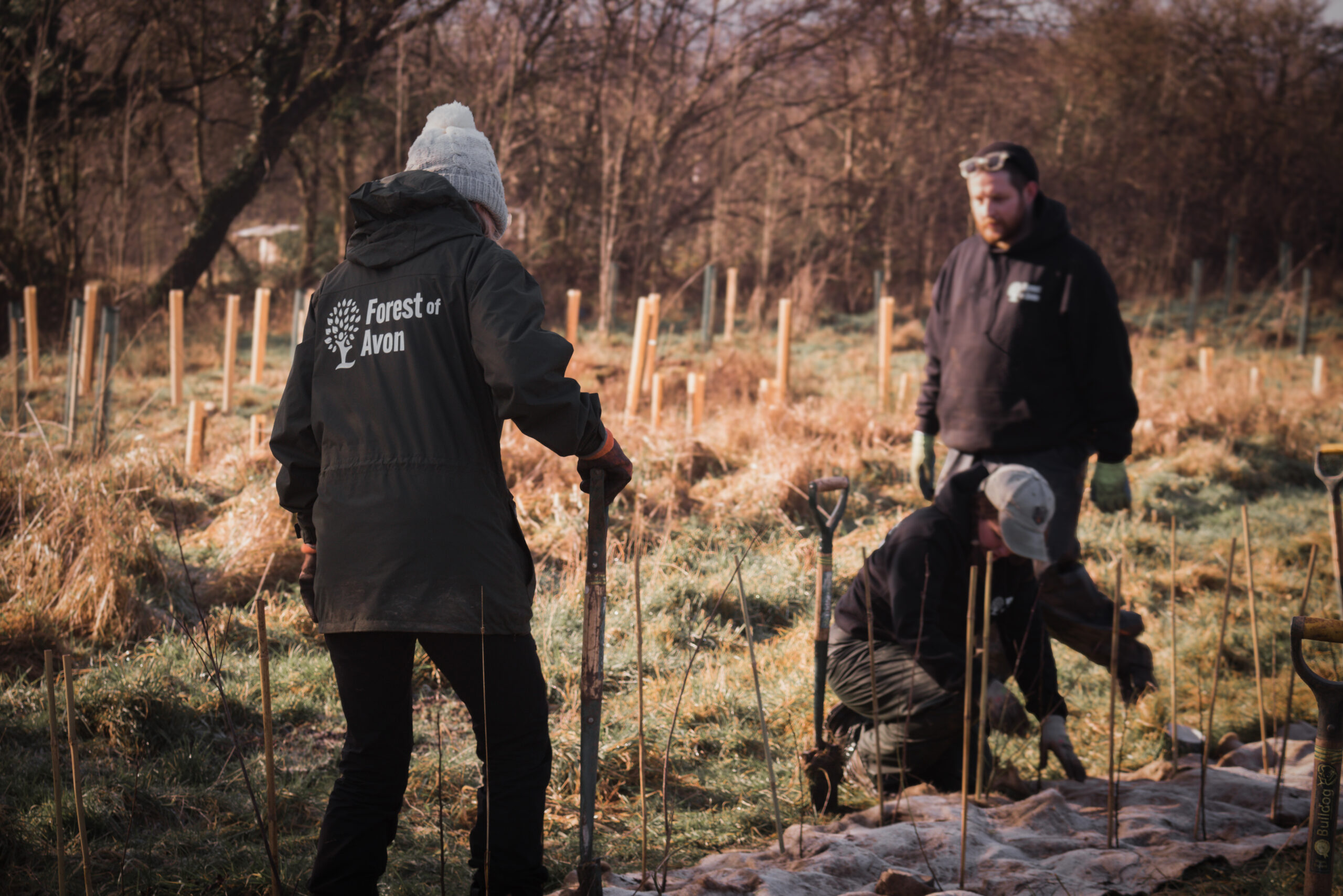
Projects As one of England’s Community Forests, the Forest of Avon provides one of the most competitive tree planting grant schemes in the country. Funded through Trees for Climate, part of Defra’s Nature for Climate programme, the scheme can cover up to 100% of project costs and offers up to 15 years of establishment payments.
Our tree team manages planning assessments, site design, and logistics, reducing paperwork and ensuring efficient project delivery. For more information about our Trees for Climate funding, please visit our website or make an enquiry to treesforclimate@forestofavontrust.org
How to help trees and support the environment
- Got land? Plant trees. Even a few native trees make a big difference.
- Plant a tree in your garden. Every tree helps wildlife and the environment.
- Take part in a volunteering event near you. Join one of our volunteer days.
- Donate to a charity that plants and cares for trees. Donate to the Forest of Avon.
- Share resources and donation links on social media. Inspire others to take action.
- Appreciate your local trees. Spend time in nature and record ancient or notable trees on sites like the Woodland Trust Ancient Tree Inventory.
- Support policies that protect trees and green spaces. Advocate for urban tree preservation and conservation.
Other resources
Trees on Farms
England’s Community Forests
Royal Horticultural Society
Tree Council
Woodland Trust
Follow us and get involved
Join Our Community


Sign up for our newsletter to receive the latest opportunities for tree planting grants and volunteering events
 Donate